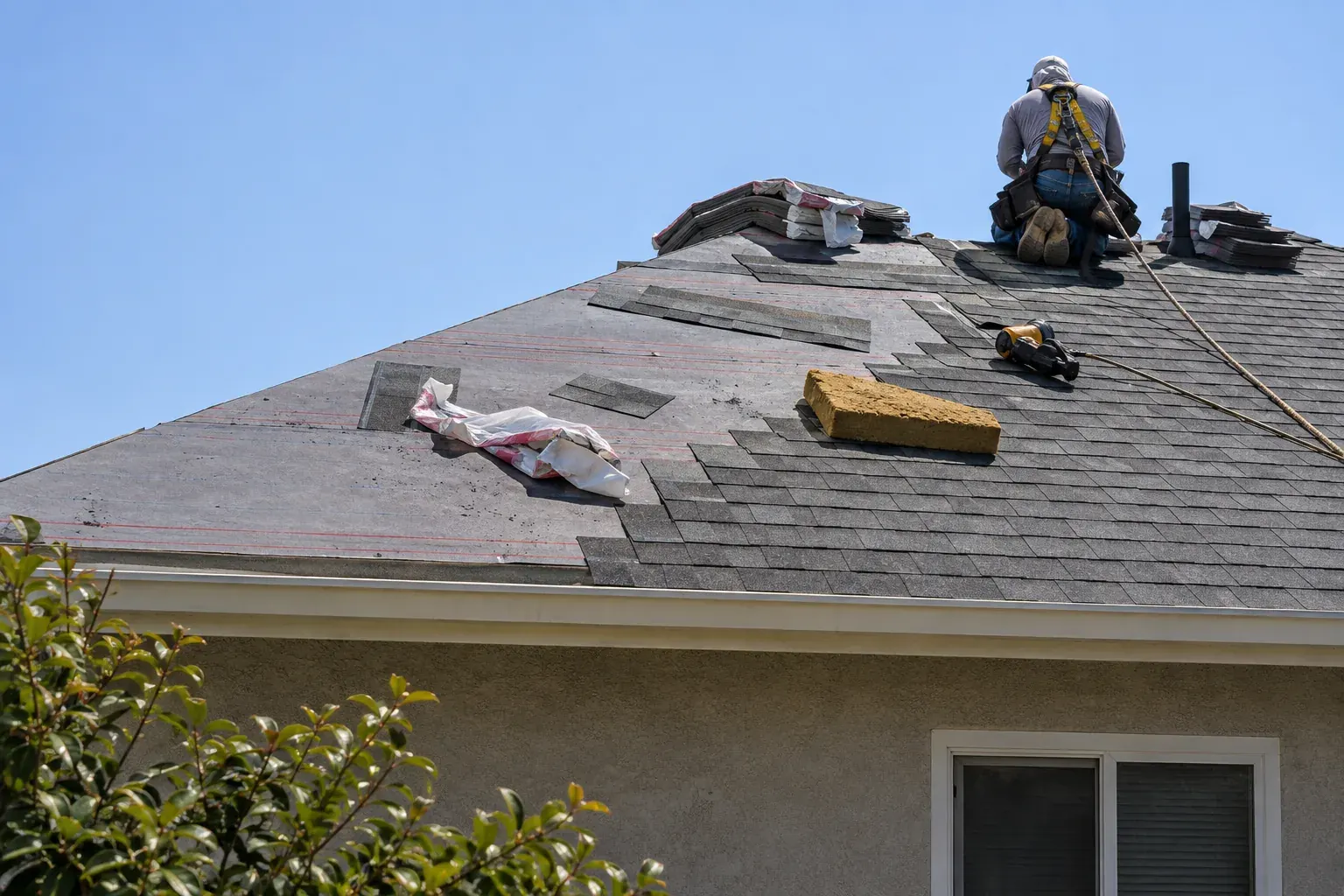
Check the License First: a CSLB Lookup in Five Minutes
Every roofer in California answers to the Contractors State License Board. Its free Check a License tool searches by license number, business name, the name of a person on the license, or a salesperson's registration. Do it before the estimate visit if you can, and again before you sign.
Status says ActiveNot expired, suspended or revoked. The record also shows when the license was issued.
C-39 Roofing is on the licenseThat's the roofing classification. A general building (B) license alone can't take a roofing-only job; more on that below.
Workers' compensation is on fileRoofing is one of the few trades where the policy is required even when the owner works alone. A C-39 license with a workers' comp exemption on file is a red flag.
The $25,000 bond is currentEvery license carries one. It isn't insurance for your job, and on a full reroof it may not go far.
The person at your door is listedCSLB suggests checking the pocket license against the personnel on the record. A salesperson should have a Home Improvement Salesperson registration, which the same tool finds.
Read the complaint disclosureThe record discloses some complaints and construction-related judgments. The law limits what appears, so a clean record is a good sign, not proof.
The $1,000 rule, and why it rarely applies to roofs
Since January 1, 2025, work under $1,000 in labor and materials can be done without a license. The exemption ends the moment the job needs a permit or the worker has employees. In the City of Los Angeles, reroofing more than 100 square feet needs a permit, so almost any real roofing job needs a licensed contractor. Older CSLB pamphlets still say $500; that figure is out of date.
C-39 or General Contractor: Who Can Take a Roofing Job
The C-39 Roofing classification covers installing and repairing the surfaces that seal, waterproof and weatherproof a building: shingles, tile, slate, metal roofing, membranes, foam and the felts and underlayments beneath them. A general building contractor (class B) is licensed for projects that combine at least two unrelated trades. Under Business and Professions Code §7057(b), a B contractor shouldn't take a contract for a roofing-only job unless it also holds C-39 or hires a licensed C-39 subcontractor.
That matters on a remodel. If a kitchen addition includes new roofing, a B contractor can run it. If the job is the roof alone, the license you check should say C-39, or the contract should name the C-39 subcontractor who will do it.
CSLB's first advice is three bids written to the same specification, and caution about one that comes in far below the others. On a roof, bids rarely match by accident. Before you compare totals, check that each one answers the same questions:
Tear-off or overlay, and how many existing layers come off.
Sheathing: how damaged decking is priced, usually per sheet, since nobody knows the count until the old roof is off.
Underlayment and flashing: what goes under the new roof, and whether flashing is replaced or reused.
Permit and inspections, with the permit fee included and the contractor named as the one pulling it.
A deposit over $1,000 or 10% of the price, a request for cash, pressure to sign the same day, no license number on the bid, a roofing license with no workers' comp, or an offer to have you pull the permit as owner-builder. Any one of these is worth a second bid.
What California Requires in a Home Improvement Contract
A roofing contract for a home is a home improvement contract under Business and Professions Code §7159, and much of what protects you is already the law:
Rule
What it means on a roof job
Down payment
No more than $1,000 or 10% of the contract price, whichever is less. The only exception is a contractor with a blanket performance and payment bond on file with CSLB, which shows on the license record.
Progress payments
Each payment is tied to work done or materials delivered. The contractor can't ask for or accept money ahead of the work.
Right to cancel
3 business days after signing, or 5 business days if you're 65 or older, by written notice.
Mechanics lien notice
The contract must explain that unpaid subcontractors and suppliers can place a lien on your home. Ask for lien releases as you pay.
What it must state
The license number, a description of the work with the significant materials, the price, approximate start and finish dates, and how change orders work.
Keep a job file: the contract, change orders, receipts and photos. Hold the final payment until the work is done to your satisfaction and the building department has signed off the permit.
In the City of Los Angeles an owner, a contractor or an authorized agent can apply for the permit. If you sign as owner-builder, LADBS treats you as the party responsible for the work. Its own owner-builder notice warns that unlicensed operators often ask homeowners to do exactly that, and that the owner can be liable for injuries to unlicensed workers that a homeowners policy may not cover. The simple rule: the contract names the contractor as the one who gets the permit, with the fee included. Our permit guide and checker shows which LA reroofs qualify for an Express Permit.
A new roof usually comes with two. The manufacturer's warranty covers defects in the materials. The workmanship warranty is the contractor's promise about the installation, and it's only as good as the business behind it. Shingle makers such as GAF, Owens Corning and CertainTeed run contractor credential programs, and their enhanced warranties are registered through contractors they've credentialed; CertainTeed's, for example, requires training and an active license and insurance. Ask which named warranty you're getting, who registers it, and get both terms in writing.
Damage brings door-knockers. In an area under a declared emergency, contracting without a license is a felony, repair contracts must be fixed-price rather than time-and-materials, and Penal Code §396 bars raising prices on repair services more than 10% above the pre-emergency level, unless higher costs justify it. CSLB's advice after the January 2025 fires still holds: don't rush, don't sign over an insurance check, get three bids and don't pay cash. For the claim itself, see roof insurance in California and roof leak water damage.
Tell us about the roof and the address. One of the roofing contractors we work with in Los Angeles reaches out to look at it and write a bid. Everything on this page applies to that contractor too: ask for the license number, run it through the CSLB lookup, and compare the bid with others before you sign. About us explains how the matching works.
Hiring a Roofer: FAQs
How do I look up a roofing contractor's license in California?
Use the CSLB Check a License tool at cslb.ca.gov, or call 800-321-CSLB. Search by license number, business name or a person's name, then confirm the status is active, C-39 Roofing is listed, workers' compensation is on file and the bond is current.
Does a roofer need a license for a small repair?
Work under $1,000 in labor and materials is exempt since January 1, 2025, but not if the job needs a permit or the worker has employees. In the City of Los Angeles, reroofing more than 100 square feet needs a permit, so most roofing work needs a licensed contractor.
What is a C-39 license?
C-39 is California's roofing contractor classification. It covers installing and repairing roofing and waterproofing materials, from shingles and tile to metal and membranes. A general building contractor without C-39 shouldn't take a roofing-only contract unless a licensed C-39 subcontractor does the work.
How much should I pay upfront for a new roof in California?
The down payment on a home improvement contract can't exceed $1,000 or 10% of the price, whichever is less, unless the contractor has a blanket performance and payment bond on file with CSLB. After that, payments should follow the work actually done or materials delivered.
Can I cancel a roofing contract in California?
Yes, within 3 business days of signing a home improvement contract, or 5 business days if you're 65 or older, by written notice to the contractor.
Do roofing contractors need workers' comp?
Yes. Roofing (C-39) is one of the classifications that must carry workers' compensation even with no employees, so a roofing license should always show a policy on file.
Who should pull the permit for a reroof?
The contractor. If you sign as owner-builder you become the responsible party on the permit, and LADBS warns you can be liable for injuries to unlicensed workers. Put the permit and its fee in the contract.
Ready for a bid you can check?
Tell us about the roof. The contractor who reaches out will give you a license number to look up and a written bid to compare.